Leave it is the safety command. Dogs eat things they shouldn't, like chicken bones on the sidewalk, chocolate on the counter, medication dropped on the floor. A solid "leave it" gives you a split-second intervention that can prevent an emergency vet trip. This one is non-negotiable.
Why This Command Matters
Sidewalks have chicken bones, discarded food, and other dangers. Off-leash parks have other dogs' treats, dead animals, and questionable substances. "Leave it" is your emergency brake. It also helps with counter-surfing, cat chasing, and grabbing things from kids' hands.
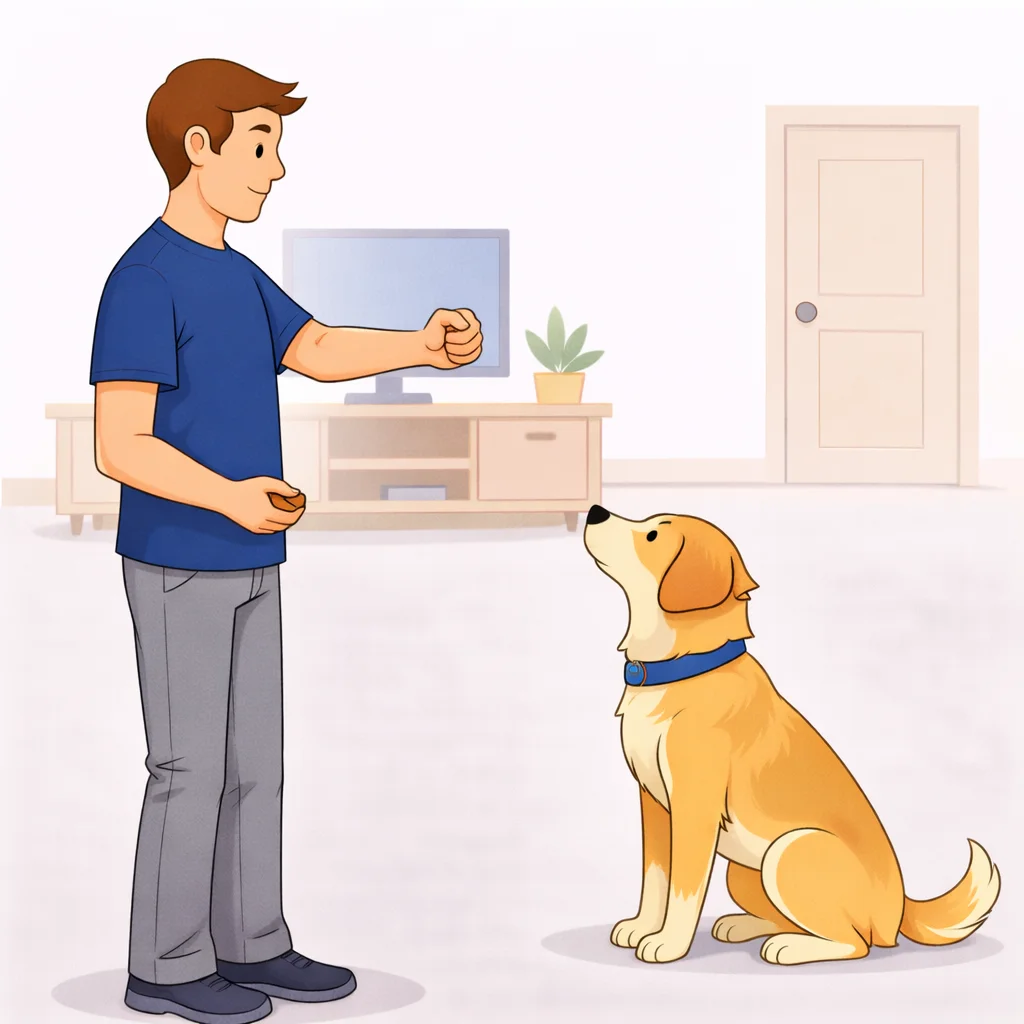
Hand Signal
Close your fist (hiding the treat) and hold it in front of you. The closed fist becomes the visual signal. It means "that's not for you."
Step-by-Step Instructions
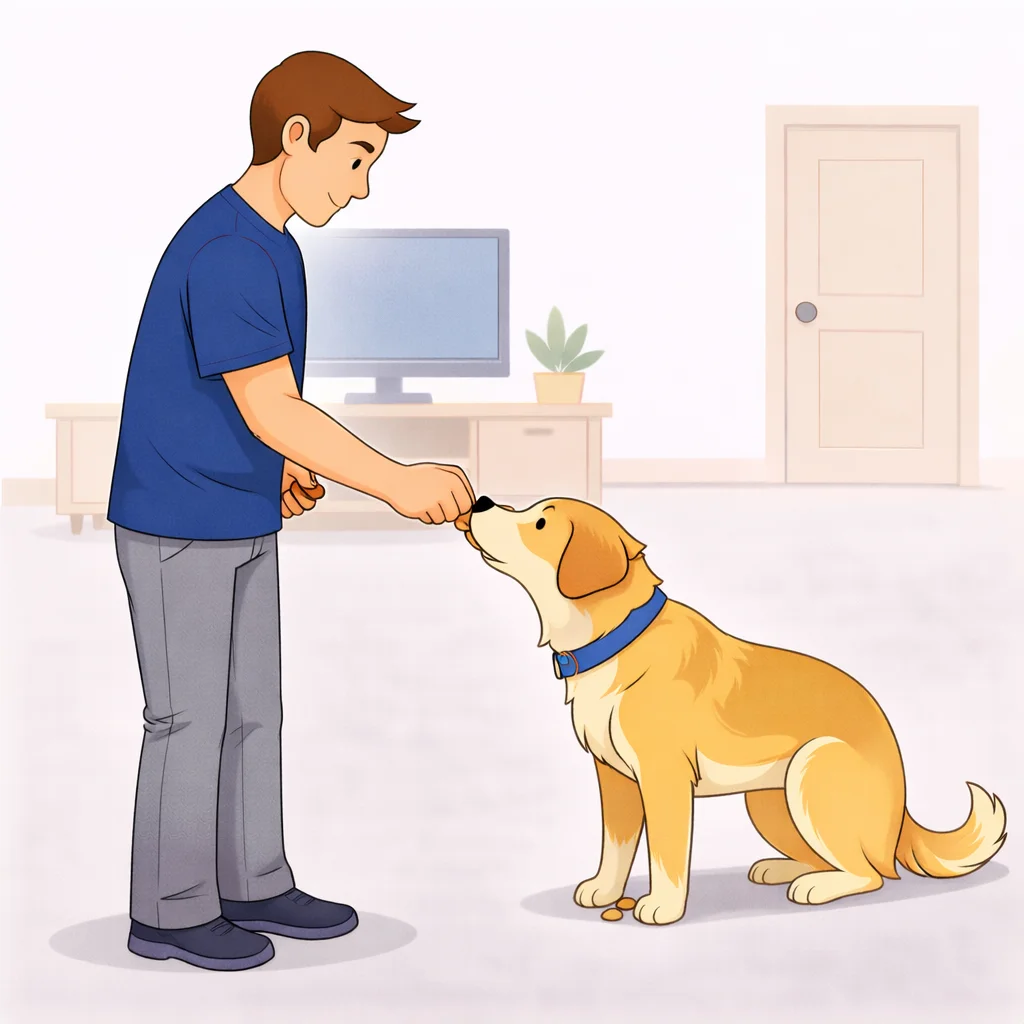
Start with a treat in your closed fist
Put a treat in your hand and close your fist. Present your fist to your dog. They'll sniff, lick, and paw at your hand. Wait. The moment they pull away or look at your face instead of your fist, give them a DIFFERENT treat from your other hand.
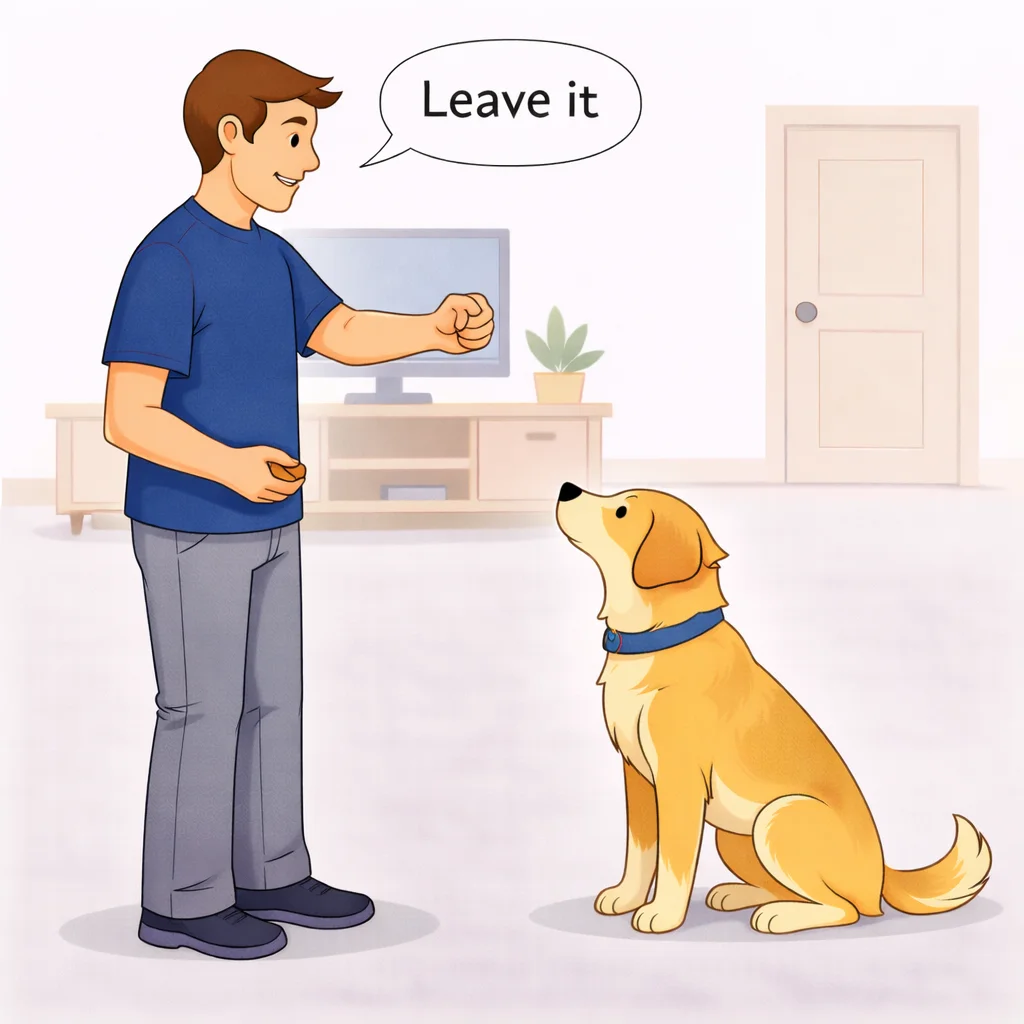
Add the command "Leave it"
Once they're consistently pulling back from your closed fist, say "Leave it" as you present your fist. Reward from the other hand when they look away from it. Repeat 15-20 times per session.
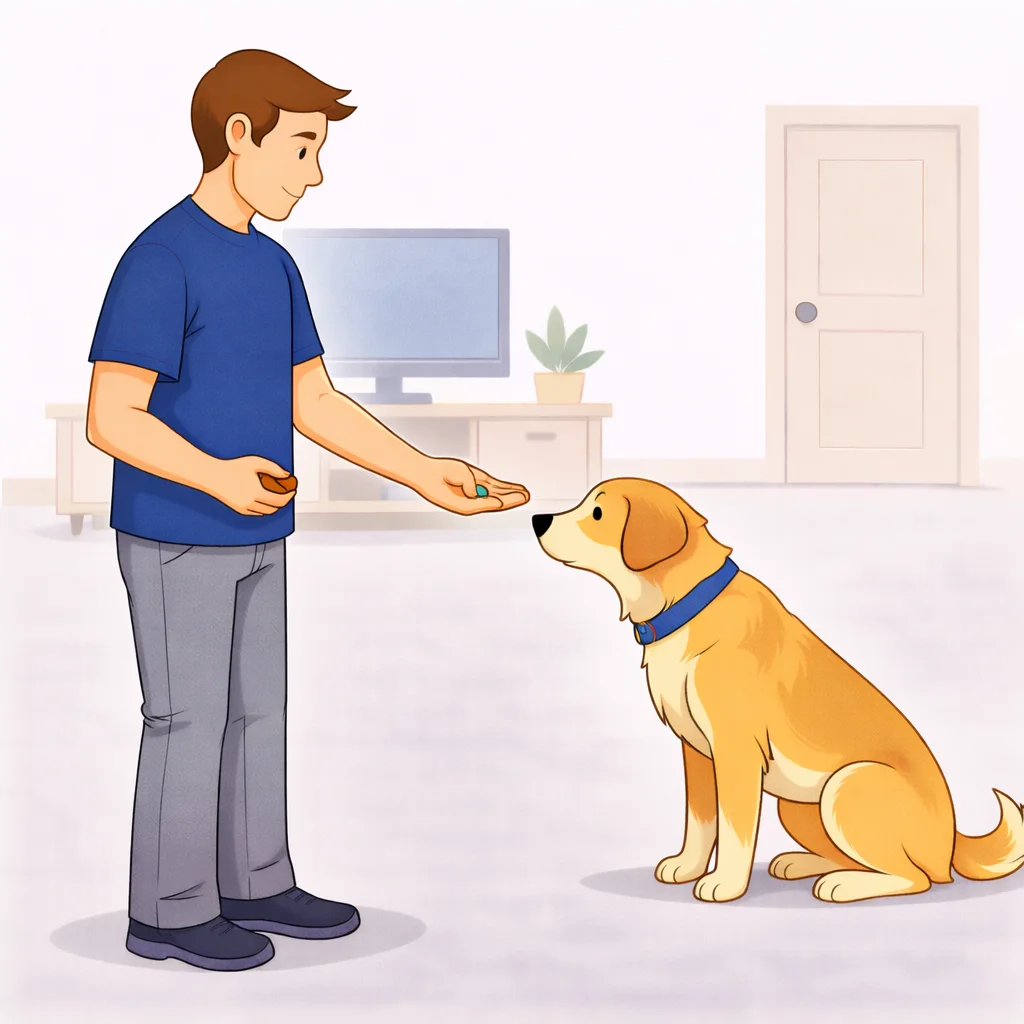
Move to an open palm
Place a treat on your open palm. Say "Leave it." If they go for it, close your hand. If they hesitate or look at you, reward from the other hand. Gradually keep your palm open longer.
Put the treat on the floor
Place a treat on the floor, cover it with your hand, say "Leave it." When they look at you instead of the treat. Reward from your other hand. Gradually lift your hand higher off the floor treat. Then try standing up.
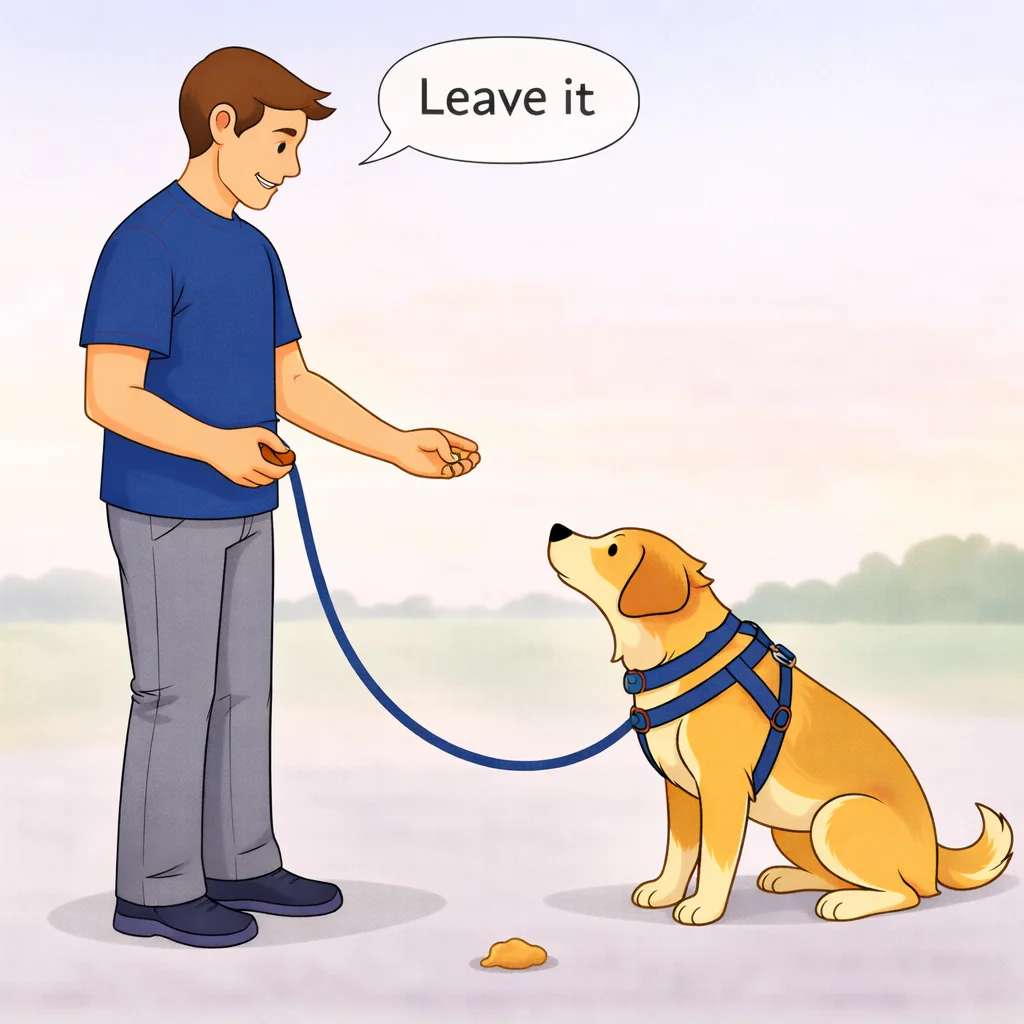
Practice in real-life situations
Practice with food on the counter edge, treats dropped on the floor "accidentally," interesting items on walks. Start on-leash so you can prevent them from getting the item if they fail. Always reward generously for leaving favourite items.
Recommended Practice
3 sessions daily, 5 minutes each. Closed fist stage takes 2-3 days. Open palm takes another 3-5 days. Floor-level reliability takes 2 weeks. Real-world practice is ongoing.
Common Mistakes
Giving the dog the item they left as a reward
Never reward with the forbidden item. Always use a separate, better treat. Otherwise you're teaching "leave it... just kidding, take it."
Saying "leave it" after the dog already has the item
Leave it is a prevention command. Use it BEFORE they grab something. If they already have it, you need "drop it" instead.
Only practicing with dog treats
Practice with real-world items: tissues, socks, food wrappers, other dogs' toys. In real life, the dangerous stuff isn't kibble.
Troubleshooting
"My dog snatches food off the ground before I can say anything"
Start on-leash for all outdoor practice. Keep them on a short leash past known problem areas. Indoors, practice the "drop a treat and cover it" game until their default is to look at you, not lunge at the floor.
"They leave it when I say so but grab it when I look away"
That means they've learned to leave it only when you're watching. Practice by saying "leave it," then deliberately looking away for 1 second. If they hold. Give a huge reward. Build up the look-away duration gradually.
"My dog resource guards and snaps when I try to take things"
Resource guarding is different from leave it training and requires professional help. Don't push this. Contact a certified behaviorist. Your local humane society or vet can refer you to specialists who handle guarding safely.
Pro Tips
Make "leave it" a game at home. Drop treats on the floor during daily life and reward huge when they look at you instead.
The trade-up principle: whatever you ask them to leave should be replaced with something BETTER. Leave a sock? Get chicken. Leave garbage? Get cheese.
Practice on every walk. Sidewalk debris is your training ground.
Pair "leave it" with "watch me" (eye contact) for a rock-solid combo.
📍 Calgary Training Tip
The Bow River pathways near Inglewood and East Village tend to have more street debris. These are great real-world practice spots once your leave-it is solid indoors. Always have really good treats ready on urban walks.