Down is the calm command. When your dog lies down on cue, they naturally settle. It's harder to be reactive, jumpy, or anxious in a down position. For rescue dogs who may carry stress, teaching a reliable down gives them a built-in way to self-soothe.
Why This Command Matters
Down is a calming position. It helps them calm down and helps dogs settle. It's essential for restaurants, vet waiting rooms, visiting friends, and car rides. A dog that can lie down and stay is welcome almost everywhere. It's also the foundation for "settle" and "place" commands later.
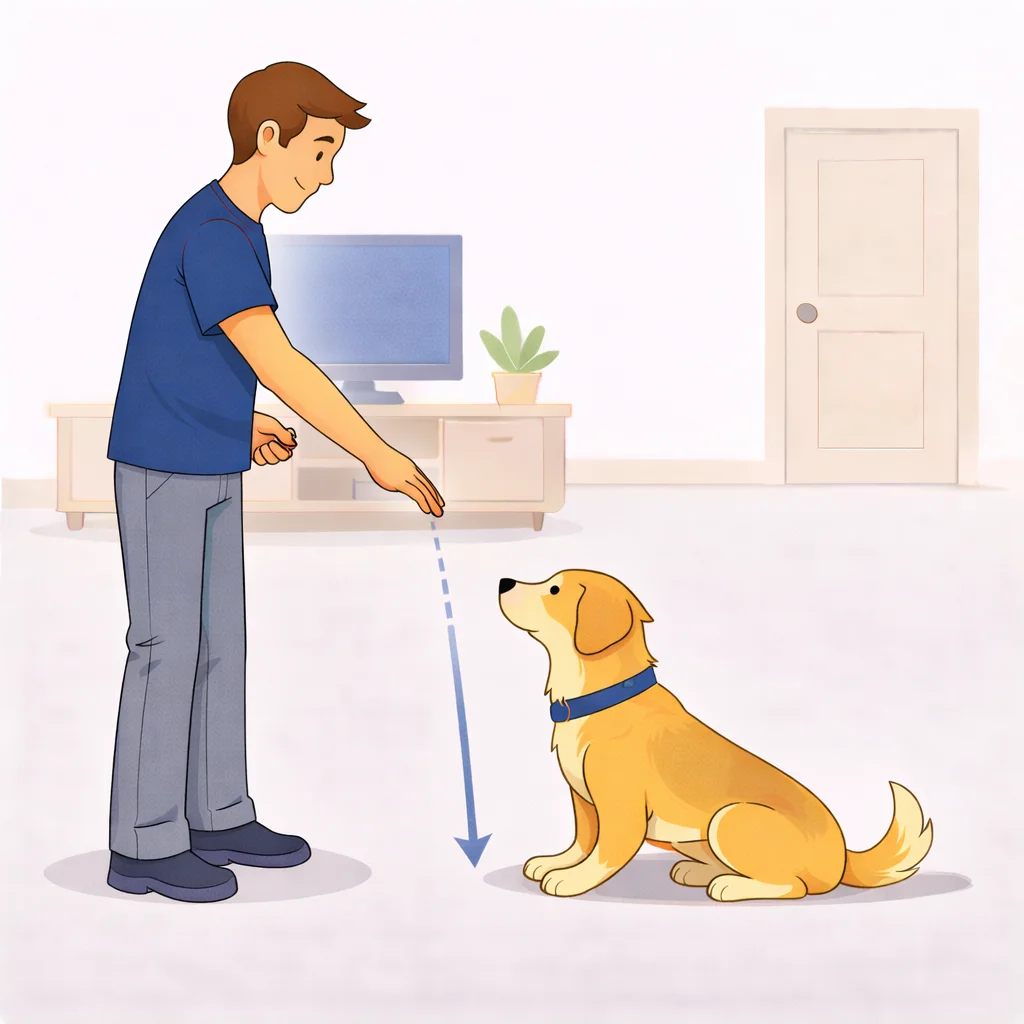
Hand Signal
Palm facing down, move your hand from the dog's nose level straight down to the floor. This is the same motion you'll use when guiding with a treat in the steps below. Over time, the treat disappears and the hand motion alone tells your dog what to do.
Step-by-Step Instructions
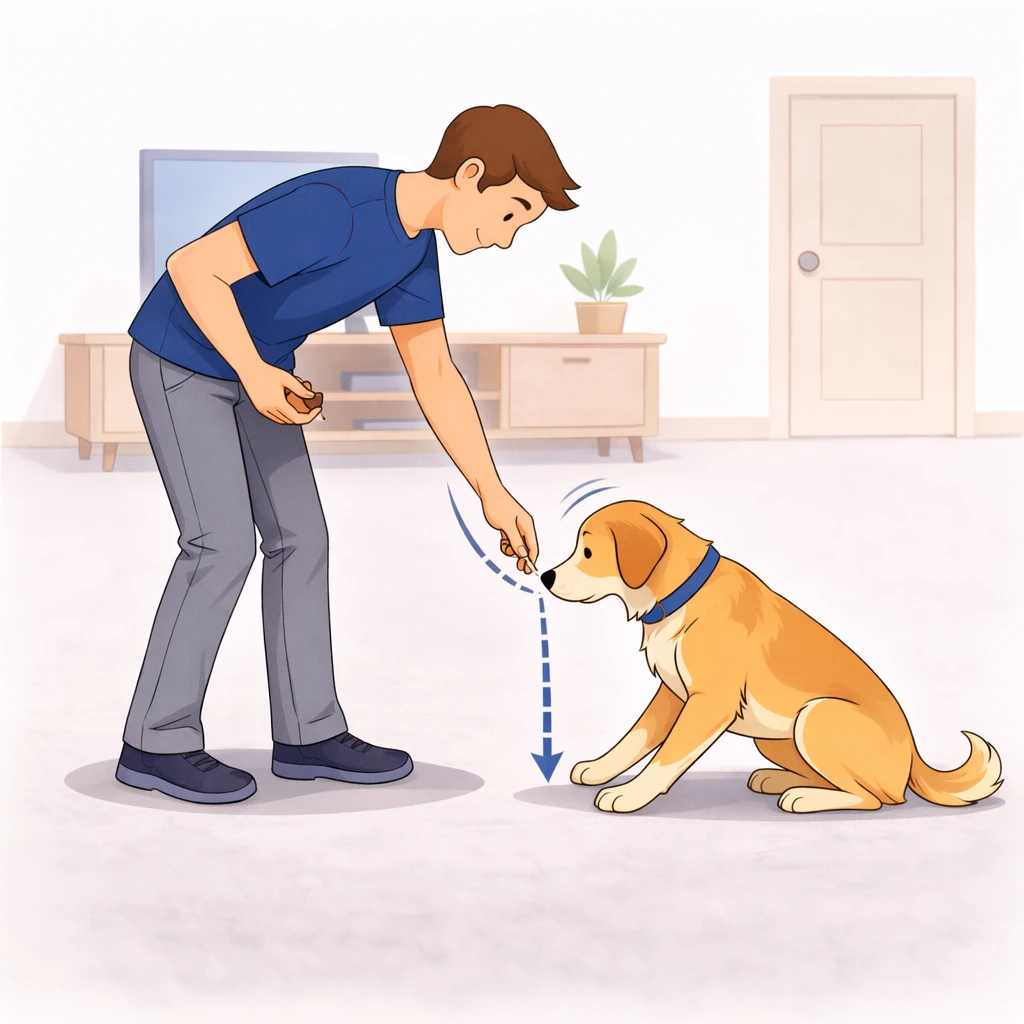
Start from a sit position with a treat at their nose
Ask for a sit first. Hold a treat right at their nose, then slowly move it straight down to the floor between their front paws. Their nose should follow the treat down, and their body should fold into a down position. The instant their elbows touch the floor, give them the treat.
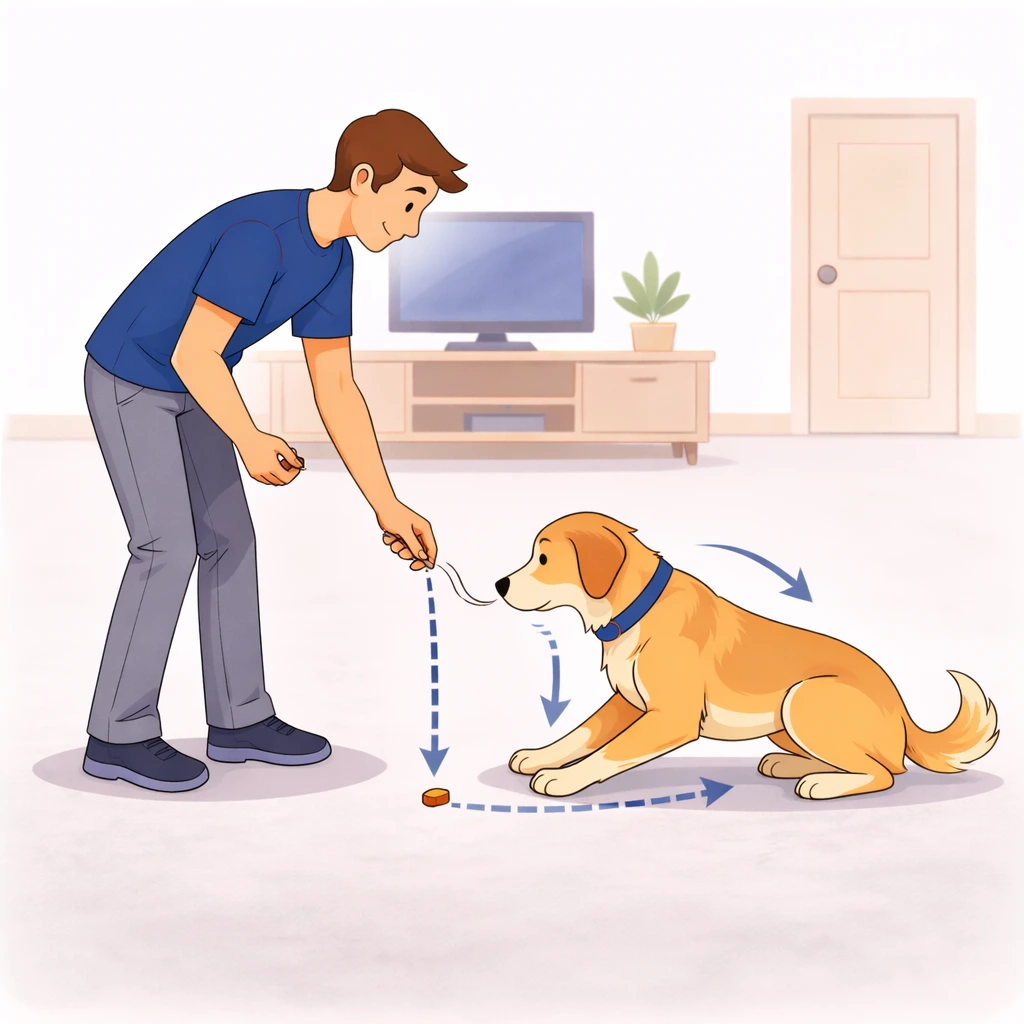
If they don't follow, try the "L" lure
Some dogs resist the straight-down lure. Instead, move the treat down to the floor, then slowly pull it forward along the ground (making an "L" shape). This draws them into a sphinx position naturally.
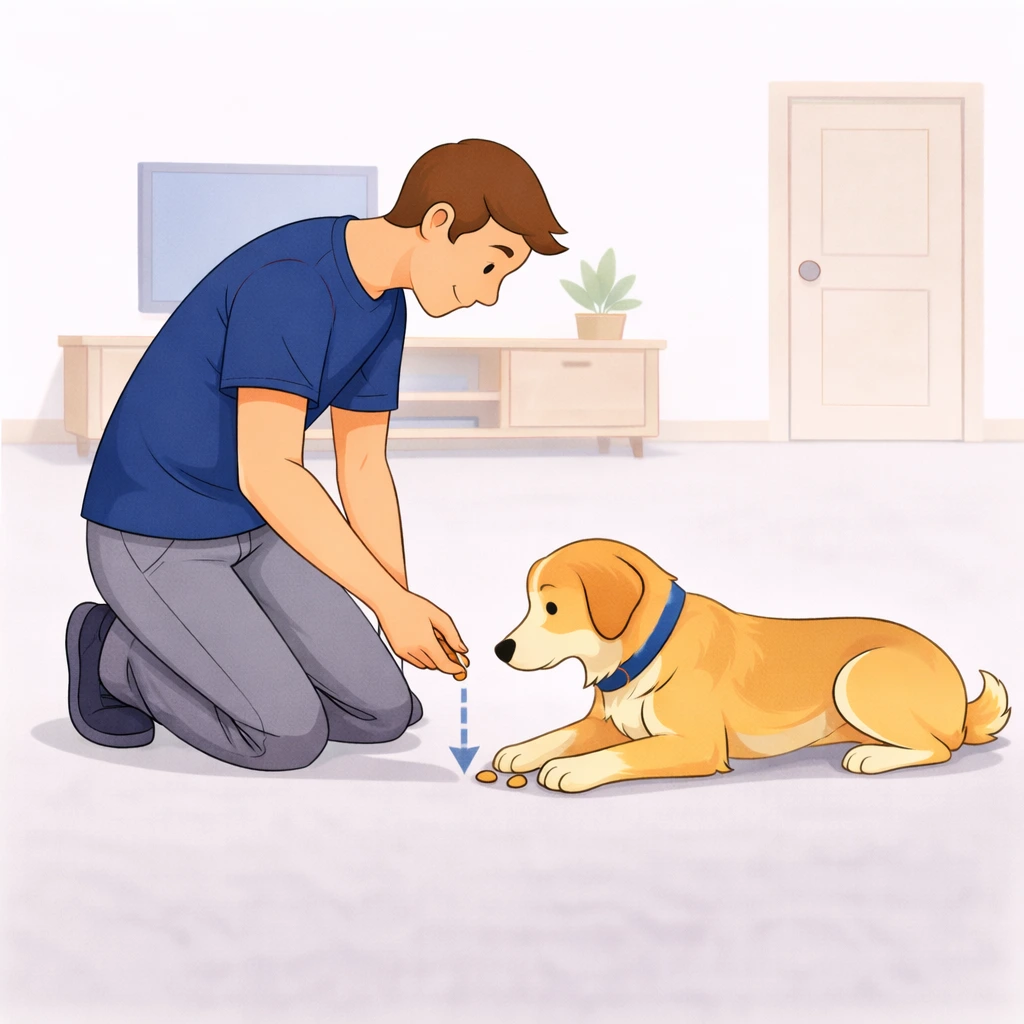
Reward generously in position
Once they're down, deliver 3-4 treats in a row while they stay in the down position. This teaches them that staying down is more rewarding than popping back up.
Add the verbal command
After 20-30 successful guided downs, start saying "Down" just before guiding with the treat. Gradually make the hand motion smaller until the hand signal alone works, then test with just the word.
Build duration
Once they go down reliably, start extending the time before the release. Treat every few seconds at first, then stretch the intervals. A 30-second down is a great first milestone.
Recommended Practice
3 sessions daily, 5 minutes each. Basic guided down takes 2-5 days. Adding the verbal command takes another week. Reliable 30-second down-stay takes 2-3 weeks.
Common Mistakes
Pushing the dog down physically
Never force a dog into a down. It creates resistance, fear, and can hurt dogs with joint issues. Luring is always better. Let them choose the position.
Asking for a down when the dog is excited or wound up
Down requires calm. If your dog is zooming around, ask for a sit first. Let them settle for a moment, then say "Down".
Rewarding after they pop back up
The treat must be delivered while they're still in the down position. If they get up before you treat, ask again and be faster with the reward next time.
Troubleshooting
"My dog's butt pops up when their front goes down"
Try practicing on a slippery floor (tile or hardwood) where their paws slide forward more easily. Or lure them under a low object like a coffee table or your bent leg. They have to go flat to get the treat.
"My dog won't go down from a stand"
That's okay. Always start from a sit. Down-from-stand is an advanced variation. Master sit-to-down first, then try stand-to-down weeks later.
"My rescue seems scared of the down position"
Some rescue dogs associate lying down with vulnerability. Don't push it. Instead, reward any head-lowering or crouching. Shape the behavior gradually over days. Build trust first. The down will come when they feel safe.
Pro Tips
A "down" at the front door when guests arrive solves 90% of jumping problems.
Practice "down" on different surfaces, carpet, tile, grass, concrete. Dogs don't automatically transfer skills to new places.
Once reliable, teach "down" at a distance. Point to the ground from across the room.
Pair down with a mat or bed and you're halfway to teaching "place" (Level 3).
📍 Calgary Training Tip
Practice outdoor downs on a blanket or mat at first. Calgary concrete gets cold and dogs resist lying on frozen ground. In summer, Bowness Park picnic areas are great for practicing down-stays in a social setting.