"Sit" is the gateway command. It's usually the first thing any dog learns, and for good reason. It's simple, it builds confidence for both you and your dog, and it replaces a ton of unwanted behaviors. A dog that knows "sit" is a dog that can wait at the door, greet people politely, and pause before crossing the street.
Why This Command Matters
Sit is the foundation of self-control. Instead of jumping on guests, your dog sits. Instead of bolting out the door, your dog sits. Instead of lunging at food, your dog sits. It's the go-to behavior that replaces chaos with calm. For rescue dogs adjusting to home life, a reliable sit gives them structure and something they can succeed at easily.
Hand Signal
Start with an open palm facing up at your chest, then move it upward in a small arc. This naturally draws the dog's eyes up and rear end down. Eventually, a subtle upward flick of the hand is all you need.
Step-by-Step Instructions
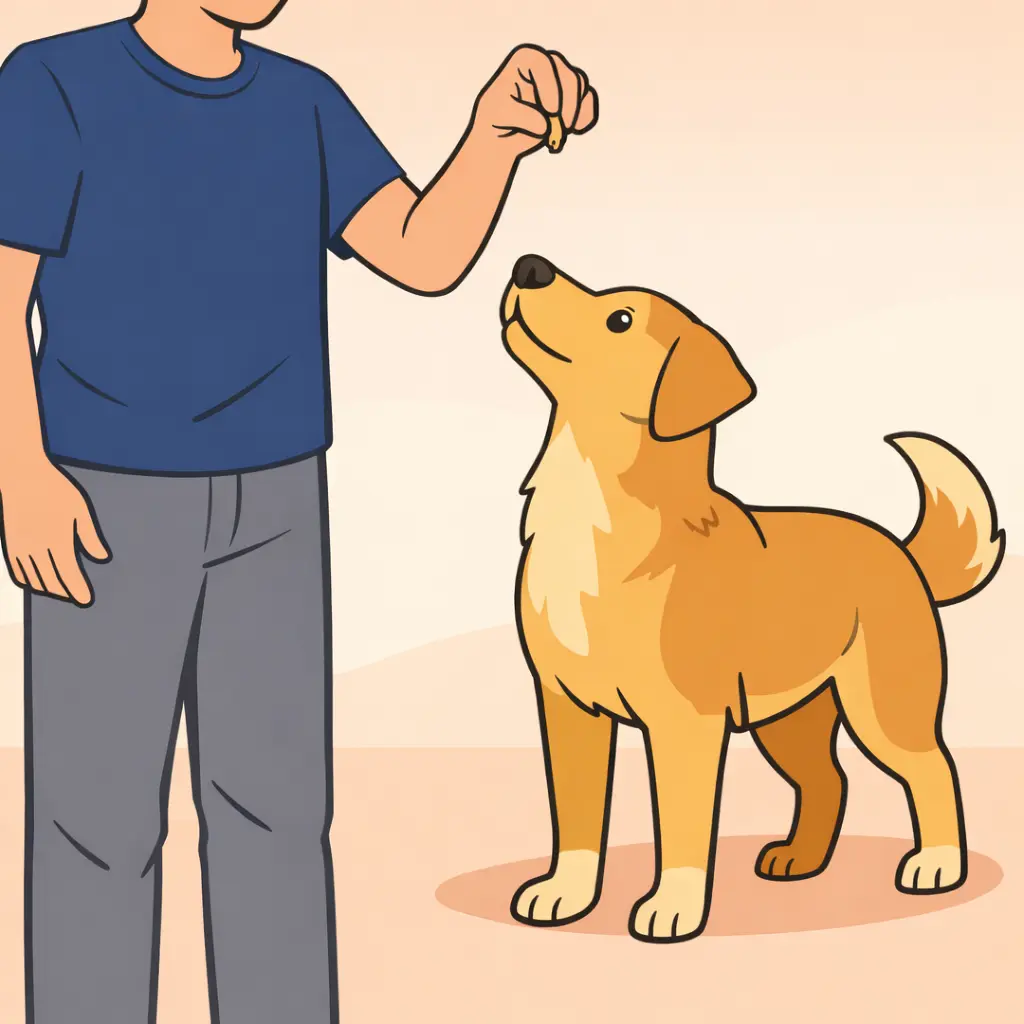
Get a treat and hold it at your dog's nose
Hold a treat between your thumb and fingers, right at your dog's nose level. Let them sniff it but don't let them take it. You want them interested and focused on the treat.
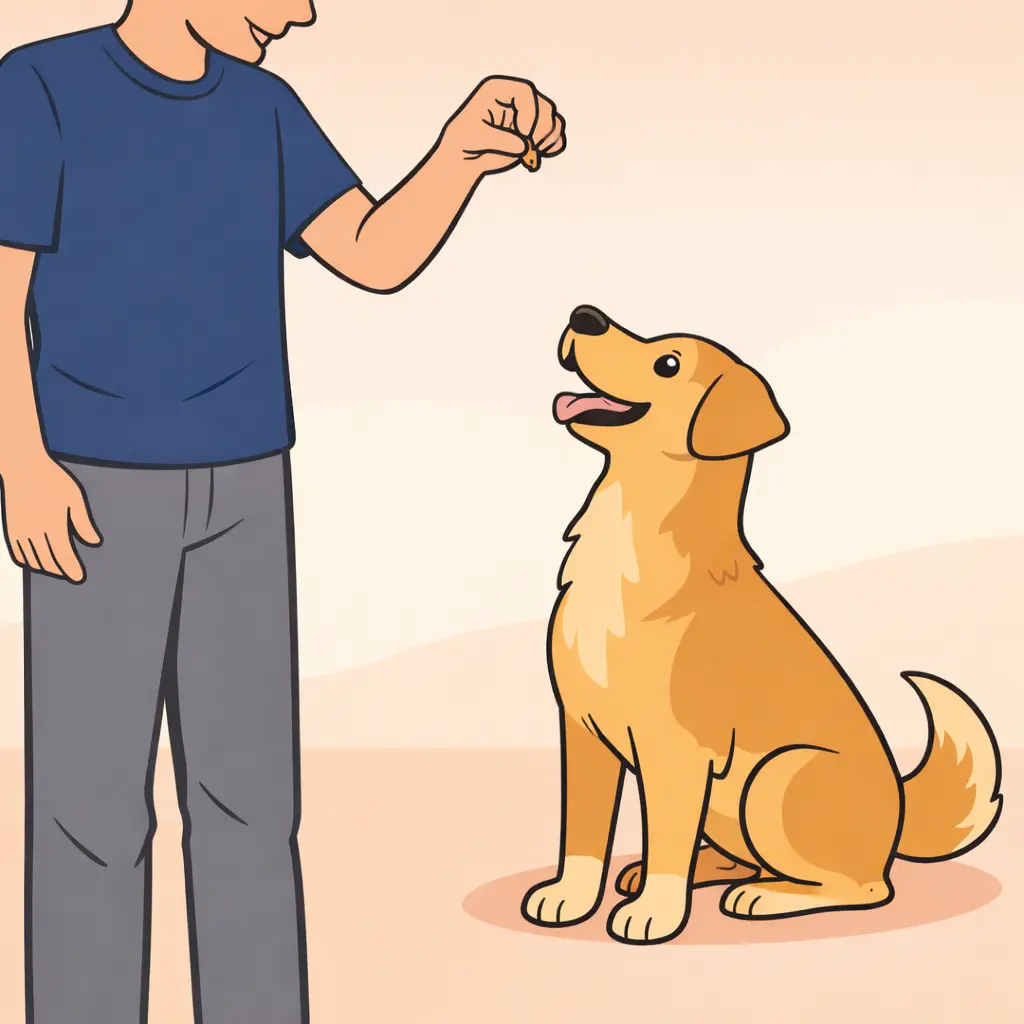
Slowly move the treat up and slightly back over their head
Move the treat in an arc from their nose upward, toward the space between their ears. As their nose follows the treat up, their rear end naturally goes down. The second their butt touches the floor. Say "Yes!" and give the treat.
Repeat the treat guide 10-15 times
Practice the guiding motion until your dog sits smoothly every time. At this point you're not saying "sit" yet. Just guide with the treat, say "Yes!", and reward.
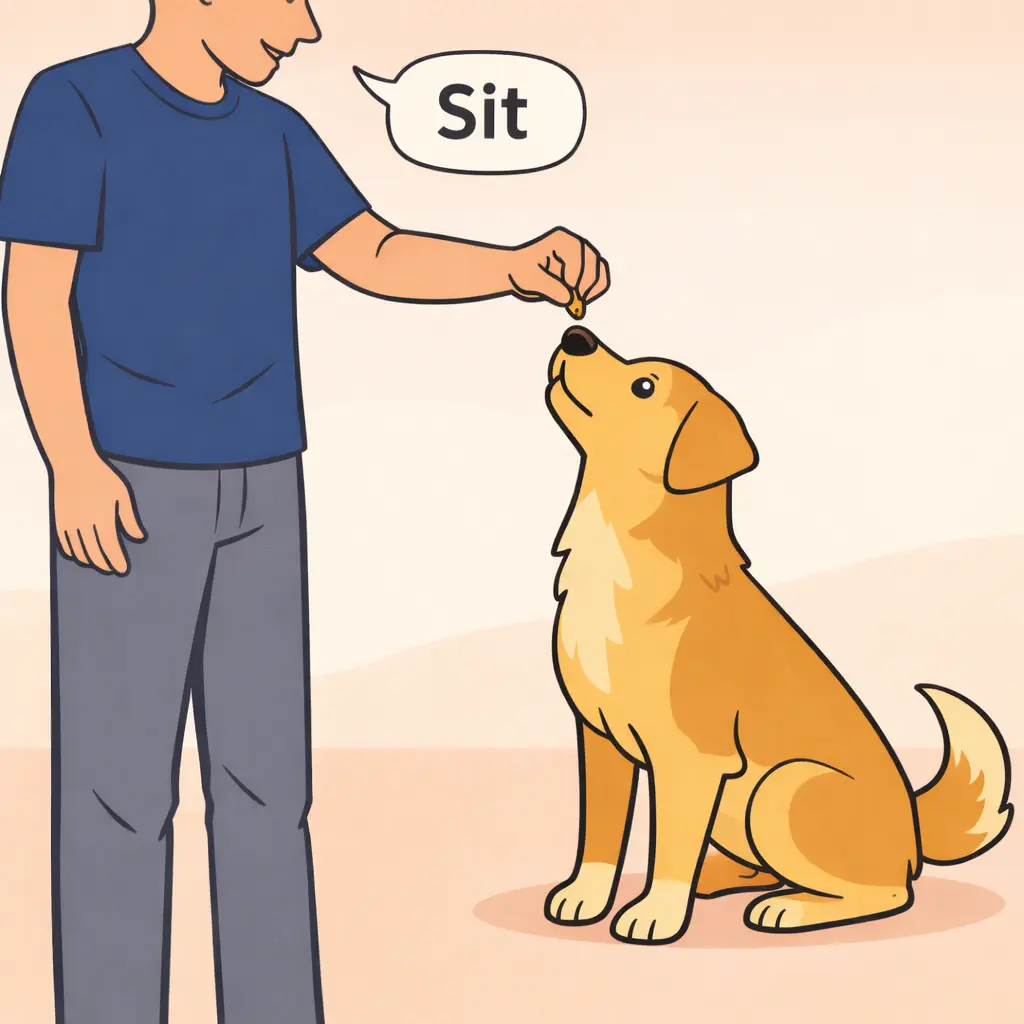
Add the word "Sit"
Once they're sitting reliably with this method (usually session 2 or 3), say "Sit" just BEFORE you guide with the treat. The sequence is: say "sit", then guide with the treat, then mark, then treat. After 20-30 reps, start testing without the hand guide.
Turn the treat guide into a hand signal
Gradually make the guiding motion smaller. From a full arc to just an upward flick. Then try with an empty hand (treat in other hand). When they sit from the hand signal alone, you've got it.
Add the "3 D's": Duration, Distance, Distraction
Once "sit" is reliable in the living room, start adding challenges one at a time. Ask for sit and wait 2 seconds before treating (duration). Ask from 5 feet away (distance). Ask with the TV on (distraction). Never add two at once.
Recommended Practice
3 sessions per day, 5 minutes each. Most dogs learn the basic treat guide within 1-2 days. Adding the verbal command takes another 3-5 days. Full reliability in various locations takes 2-3 weeks of consistent practice.
Common Mistakes
Pushing the dog's rear end down physically
This creates resistance and can hurt dogs with hip issues. Always guide with a treat. Let them choose to sit. It's faster and builds trust.
Saying "sit" before the dog knows what it means
Get the behavior first (through guiding with a treat), then add the word. Otherwise "sit" becomes meaningless background noise.
Repeating "sit, sit, sit, SIT"
If you repeat, you're teaching them that "sit" means "ignore the first three times." Say it once. If nothing happens, lure them into position and try again.
Training when the dog is too excited or too tired
The best time to train is after a short walk when they've burned off initial energy but are still alert. Not after a nap, not during zoomies.
Troubleshooting
"My dog keeps jumping for the treat instead of sitting"
You're holding the treat too high. Keep it very close to their nose and move it backward slowly over their head, almost touching their skull. If they back up instead of sitting, practice with a wall behind them.
"They sit at home but not at the park"
Totally normal. You haven't practiced this in that environment yet. Start at the edge of the park where it's calmer, use higher value treats, and lower your expectations. Five successful sits at the park edge is better than twenty failed ones at the playground.
"My senior rescue won't sit? Is it a training problem?"
It might be physical. Dogs with hip dysplasia, arthritis, or joint pain may avoid sitting because it hurts. If your rescue resists sitting specifically, get a vet check before pushing the command. You can teach "stand-stay" as an alternative.
Pro Tips
Ask for "sit" before everything good: meals, walks, treats, play, going through doors. This simple habit builds incredible manners.
Once reliable, start randomizing rewards. Don't treat every time. Reward every 2nd or 3rd sit. This keeps them guessing and actually makes the behavior stronger.
Practice "sit" in every room of your house. Dogs don't automatically transfer skills to new places. "Sit" in the kitchen isn't the same as "sit" in the bedroom to them.
Release your dog from sit with a consistent word like "okay" or "free." Don't just let them wander off. Teach a clear start and end.
📍 Calgary Training Tip
Once your dog has a solid sit, practice at Riley Park or the Inglewood Bird Sanctuary paths, with moderate distractions with other dogs at a distance. In winter, indoor practice at pet-friendly stores like PetSmart on Macleod Trail can add real-world practice without freezing.