This is the final boss of dog training. Off-leash recall means your dog comes back to you every single time. Even when there are squirrels, other dogs, food on the ground, or a wide-open field. It takes months of foundation work, and many dogs never get there because their owners rush the process. If you've mastered Levels 1-3, you're ready to do this right.
Why This Command Matters
Off-leash parks are a gift for dogs and owners. But most city bylaws require dogs to be "under control" even in off-leash areas. That means vocal recall that works. A dog without reliable off-leash recall doesn't get to enjoy these spaces safely, and puts other dogs and people at risk.
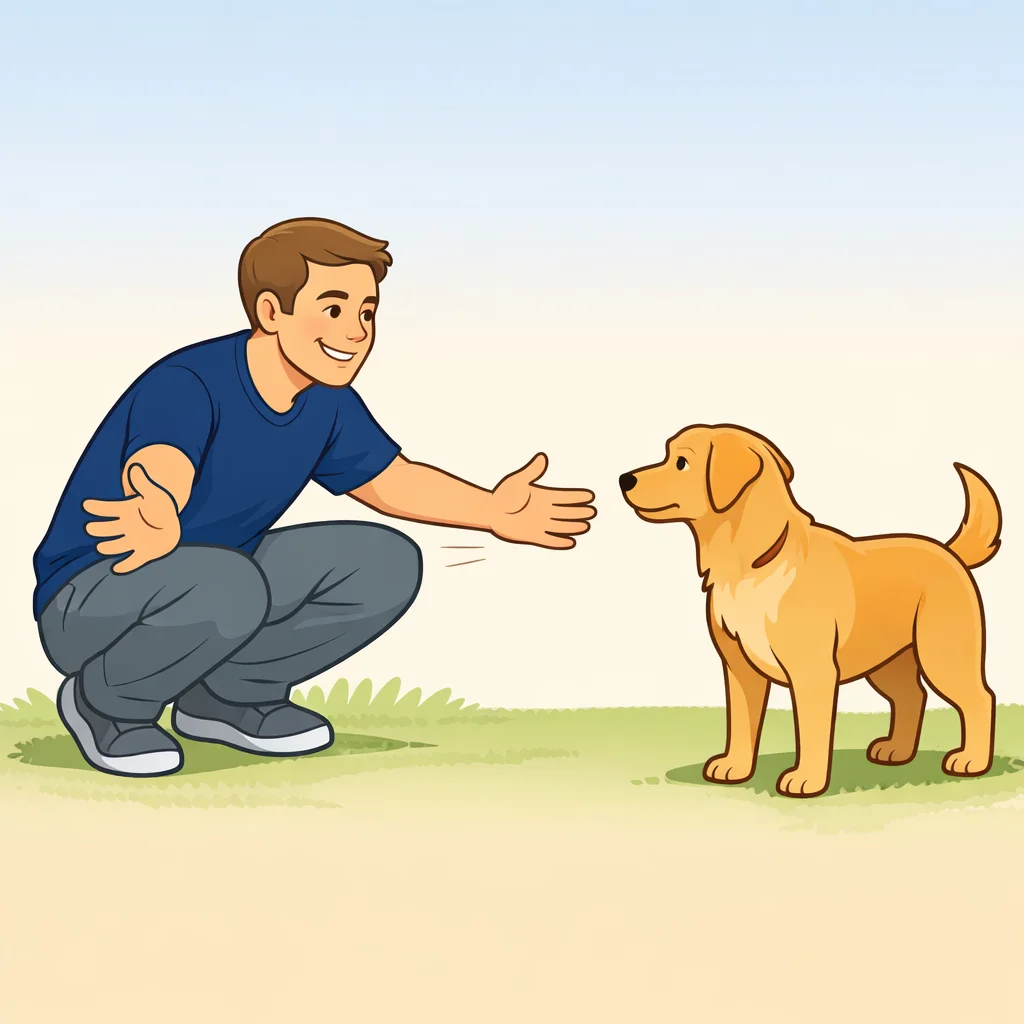
Hand Signal
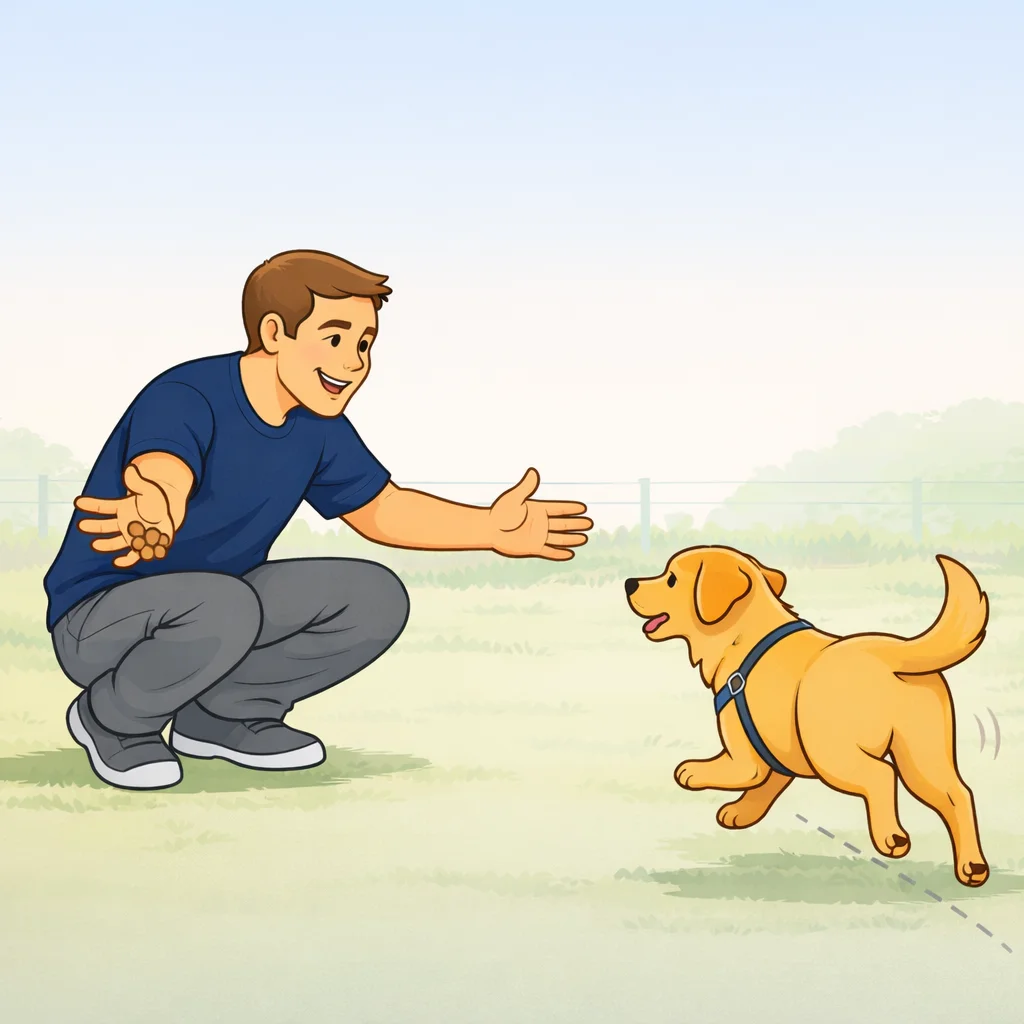
The same open-arms gesture from basic recall, but paired with a whistle or unique word that's reserved exclusively for off-leash situations. The visual signal is you crouching slightly with open arms, making yourself a target.
Step-by-Step Instructions
Choose a recall word or whistle you've NEVER used before
Your basic "come" might have some baggage by now. Pick a completely fresh recall command. A whistle pattern (three short blasts), or a unique word like "here" or "to me." This word will ONLY be used off-leash and will ONLY have positive associations.
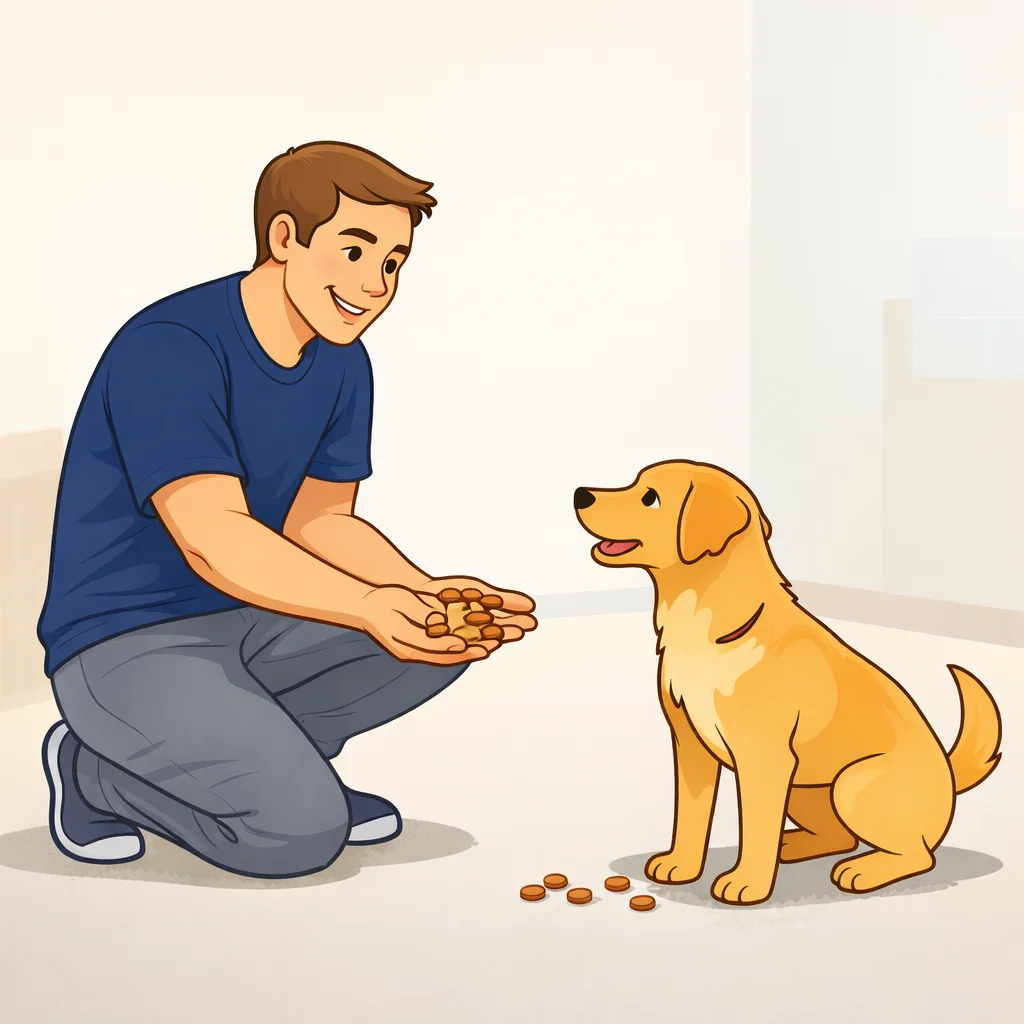
Load the new command with insane value
For 2 weeks, practice indoors only. New command, then instant big reward (real chicken, steak, cheese). Do 10 reps per day. The dog should hear this command and think "that's the greatest sound in the world." Don't use it outside yet.
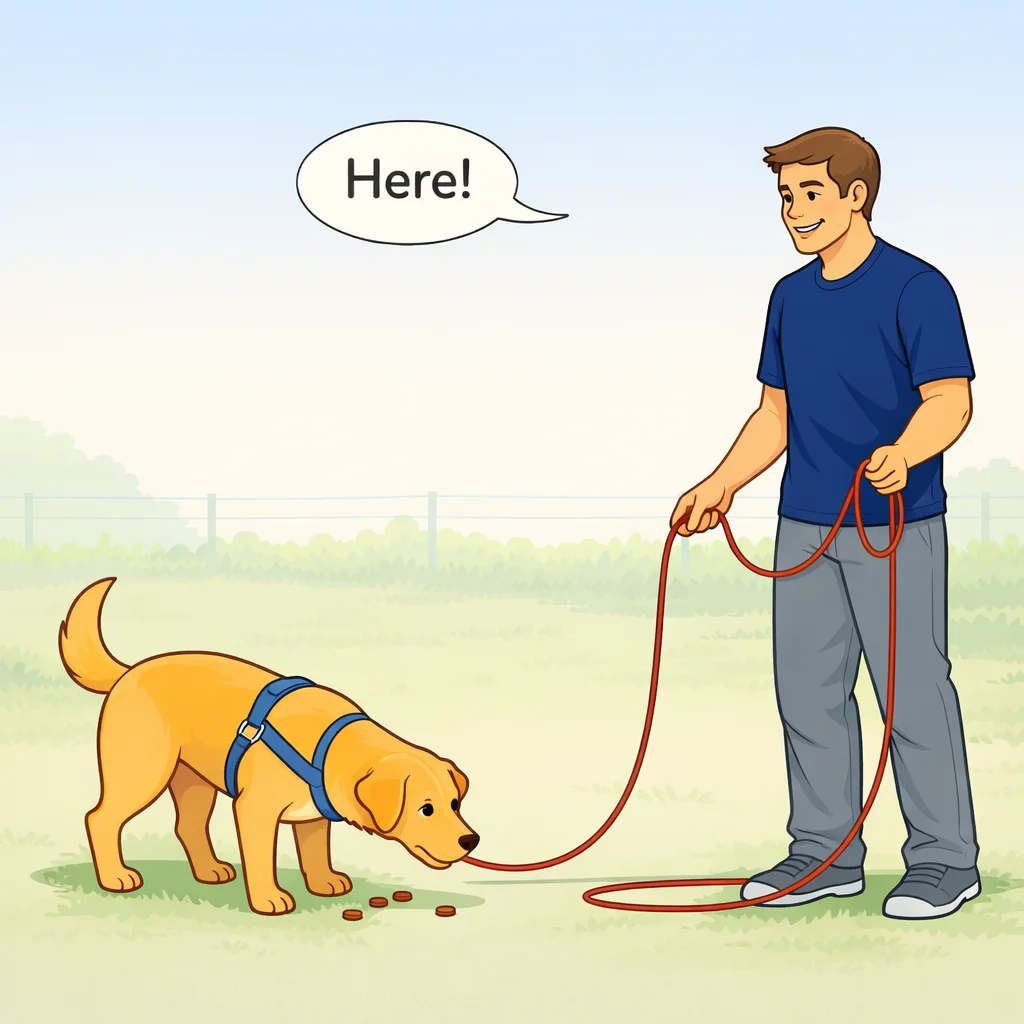
Move to a long line in a fenced area
Clip a 30-50 foot long line to a harness. Go to a fenced park or baseball diamond. Let your dog explore. When they're mildly distracted (sniffing, not chasing), use the new command. If they come, give a massive party, 10 treats in a row, play, celebration. If they don't, gently guide them in with the line.
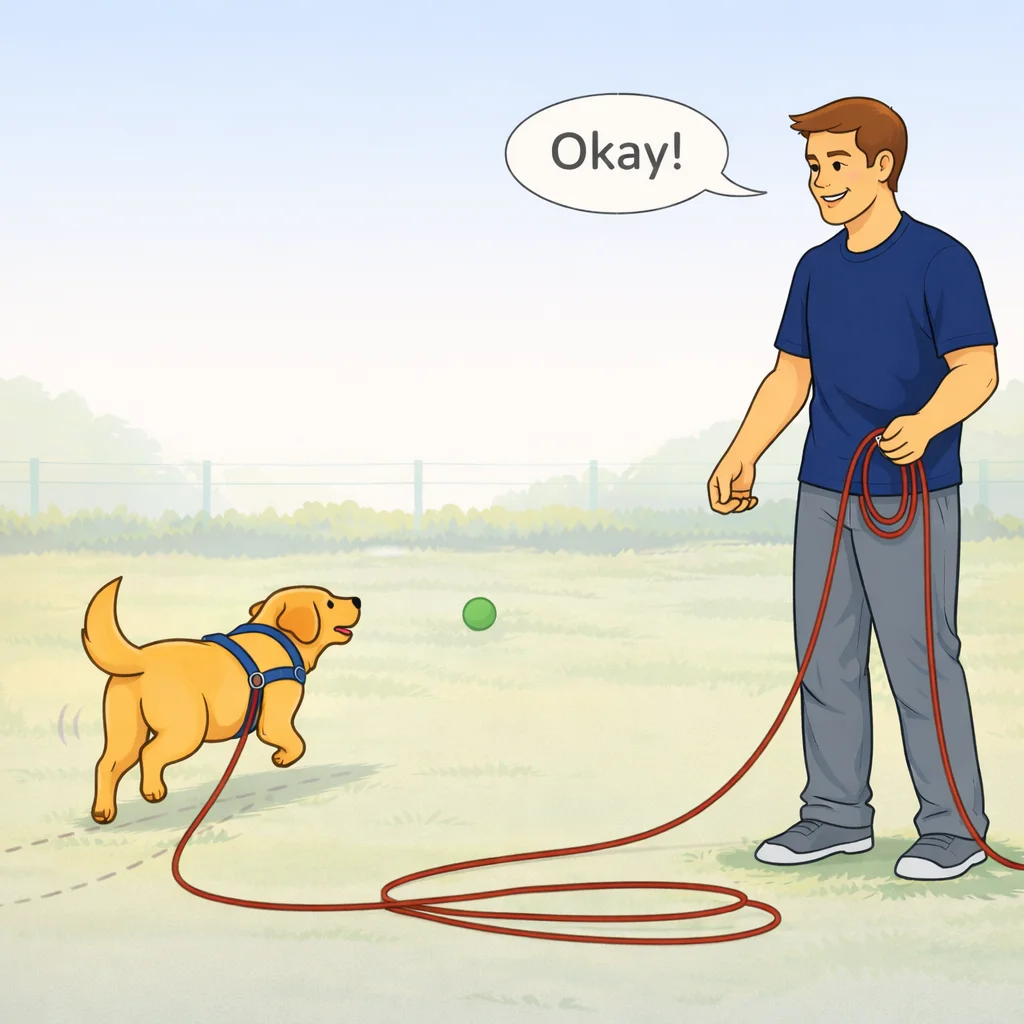
Practice the "premack principle"
Call your dog back, reward them, then release them to go play again. This teaches that coming back doesn't end the fun. It's just a pit stop. Do 5-10 "check-in recalls" per park visit where they come back, get rewarded, and are released immediately.
Graduate to off-leash in a fenced area first
Remove the long line in a securely fenced area. Practice recalls at increasing distraction levels. Only move to unfenced areas when your dog comes back 9 out of 10 times in a fenced space with other dogs present.
Build real-world reliability
In unfenced off-leash areas, start during quiet hours with few distractions. Keep early sessions short. About 10 minutes of off-leash with frequent recalls. Gradually extend time and add difficulty. Always have your long line as a backup option.
Recommended Practice
Indoor command practice: 2 weeks, 10 reps/day. Long line practice: 4-8 weeks, 3-4 sessions per week. Fenced off-leash: 2-4 weeks. Unfenced reliability: ongoing. Total timeline to reliable off-leash recall: 3-6 months minimum.
Common Mistakes
Going off-leash before the dog is ready
If your recall isn't 90%+ reliable on a long line with distractions, your dog isn't ready for off-leash. Rushing this is how dogs get lost, hit by cars, or into fights. Be patient.
Only calling the dog back when it's time to leave
If recall always means "fun is over," they'll learn to avoid it. Call them back 10 times per visit and release them 9 of those times. Only leash up on the last one.
Punishing a slow recall
If they take 30 seconds to come back, reward them anyway. Any punishment for coming. Even a frustrated tone. That damages the recall. Coming back should always feel safe.
Troubleshooting
"My dog blows me off when other dogs are around"
Other dogs are the ultimate distraction. Practice at a distance first. recall your dog when other dogs are 50+ feet away. Gradually decrease the distance over weeks. You need to be more rewarding than the other dog, so bring your absolute best treats.
"They come back but dodge my hand when I reach for the collar"
Practice "collar grabs" at home. Reach for the collar, grab it gently, treat. 20 reps a day for a week. The collar grab should predict good things. Many dogs learn that hands reaching = fun is over, so you need to rebuild that association.
"Recall was great but suddenly stopped working"
Something poisoned the association. You may have called them for something they didn't like, or your treat quality dropped. Go back to the long line, rebuild the command with extra treatss, and rebuild. It comes back faster the second time.
Pro Tips
Never recall your dog when you can't enforce it. If they're 200 feet away chasing a rabbit, don't call. Go get them. Wasted recalls teach the dog it's optional.
Carry treats on every single off-leash outing. The day you don't bring treats is the day you need them.
Whistle recalls are more reliable than voice in wind, rain, and across distance. Invest in a good whistle and condition it properly.
Play "hide and seek" in the park. duck behind a tree and call. Dogs who have to find you learn to keep track of where you are.